

Solar Farm Performance Optimisation: The Importance of Monitoring and Predictive Maintenance
Modern solar farm monitoring and predictive maintenance are critically important for maximising energy production, reducing downtime, and ensuring long-term return on investment. These strategies help to identify and address defects in a timely manner.
Introduction: Maximising Performance in the Digital Age
Today’s solar energy market is dynamic and competitive. To ensure the profitability and long-term success of solar farms, a proactive approach to their management is required. Simple periodic maintenance is no longer sufficient to fully utilise system potential and ensure maximum return on investment.
Technological advancements, especially in the fields of data analytics and artificial intelligence, offer new opportunities for performance optimisation. Integrated monitoring systems and predictive maintenance have become cornerstones of efficient solar farm management.
The Importance of Continuous Monitoring
Effective solar farm monitoring provides real-time data on system performance, enabling immediate response to any anomalies. This includes monitoring the operation of inverters, panels, and other components, analysing energy production, and comparing it with projected figures.
Using modern monitoring platforms, performance discrepancies can be identified, and faulty panels, inverter failures, or other issues that may reduce energy production can be detected. For example, by regularly analysing string current data, it is possible to identify individual panels with low performance, which may indicate defects or dirt, before they significantly impact overall production. Quality monitoring is the foundation of any effective maintenance strategy.
Transitioning to Predictive Maintenance
Predictive Maintenance is the next step after traditional corrective and scheduled maintenance. It relies on data analysis and machine learning algorithms to forecast potential component failures before they actually occur. This allows maintenance work to be performed before expensive damage arises, reducing downtime and maintenance costs.
For example, by continuously analysing inverter temperature and voltage fluctuations, the system can predict component degradation and recommend replacement or maintenance before the inverter completely breaks down. This means that maintenance can be scheduled at optimal times when it least affects energy production, such as during periods of low solar irradiation.
Technologies Supporting Predictive Maintenance
Various technologies are employed to implement an effective predictive maintenance strategy. Thermal drone inspections, for instance, with solutions offered by dronepv.eu, are an excellent tool for identifying hot spots, faulty elements, or other defects in panels that are not visible to the naked eye. Drone data is integrated into monitoring platforms to provide a more complete picture of the system's condition.
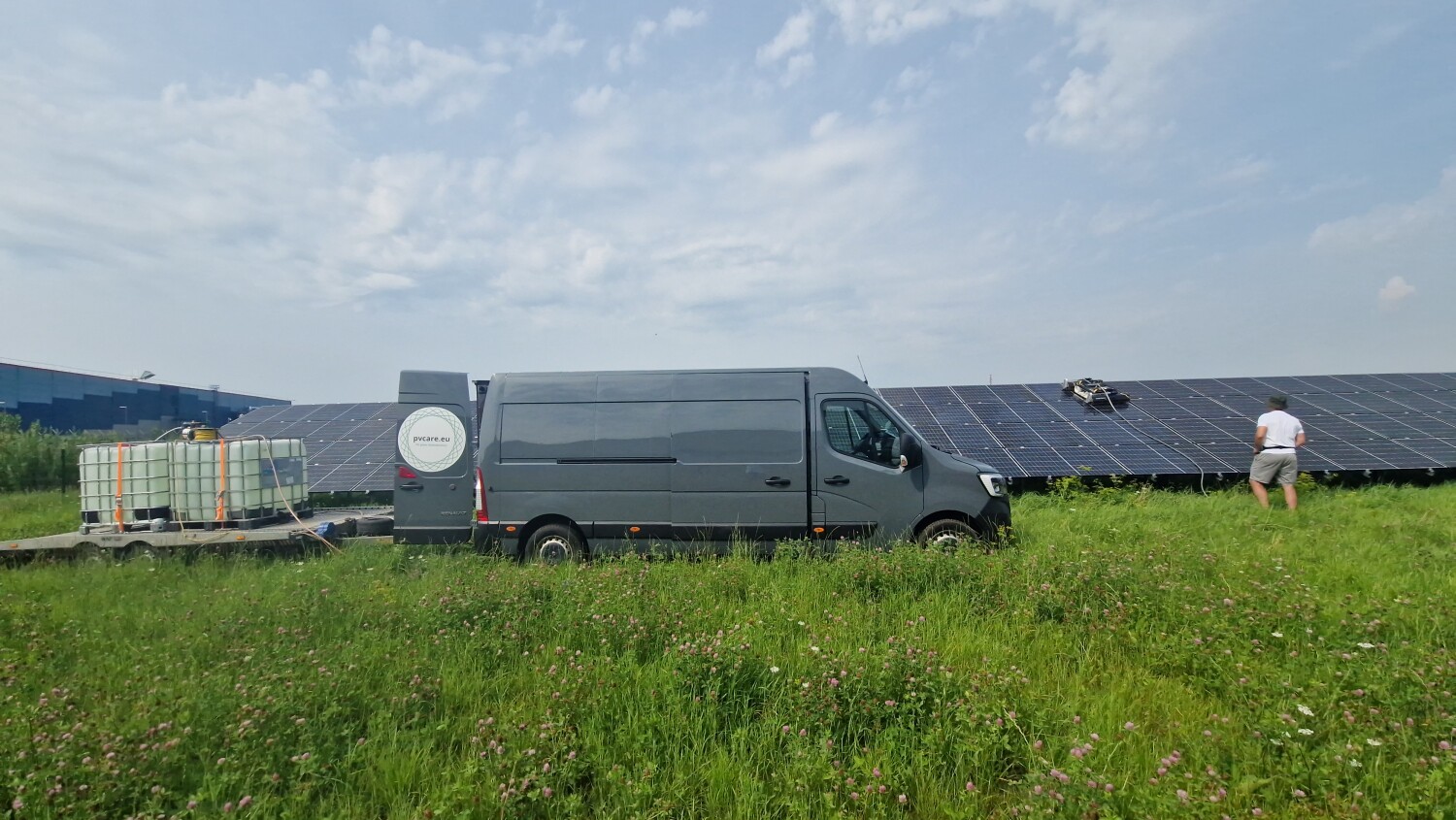
In addition to drones, data collectors, sensor networks, and centralised SCADA (Supervisory Control and Data Acquisition) systems provide a continuous data flow. The processing and analysis of this data with specialised software allow for the identification of trends, anomalies, and potential problems, thereby ensuring timely and targeted action. Similarly, regular robotic panel cleaning with filtered water, offered by pvcare.eu, helps maintain maximum panel efficiency, which in turn is confirmed by monitoring data.
Benefits for Investors and Operators
Predictive maintenance and continuous monitoring offer significant financial and operational benefits. By reducing unplanned downtime and optimising energy production, revenue from electricity sales is increased. Simultaneously, the need for emergency repairs, which are typically more expensive than planned maintenance work, is also reduced.
A sustainable approach to maintenance also extends the lifespan of solar farm components, which is critically important for long-term return on investment. Solar farm owners and operators benefit from greater operational stability, reduced risk, and the ability to more accurately forecast future costs and revenues, thereby ensuring a more stable investment portfolio.
Conclusion
In modern solar farm management, monitoring and predictive maintenance play a central role. By integrating the latest technologies and data analytics, it is possible to significantly improve solar farm performance, reduce operating costs, and ensure a stable return on investment. Companies that adopt this proactive approach will be better prepared for future challenges and will be able to maximise the potential of solar energy.
pvcare.eu, as an experienced partner in solar farm management, offers comprehensive solutions, ranging from robotic cleaning and grass mowing, to thermal drone inspections and monitoring, ensuring compliance with the LVS EN IEC 62446-2:2020 standard and maximising your solar farm's performance.