
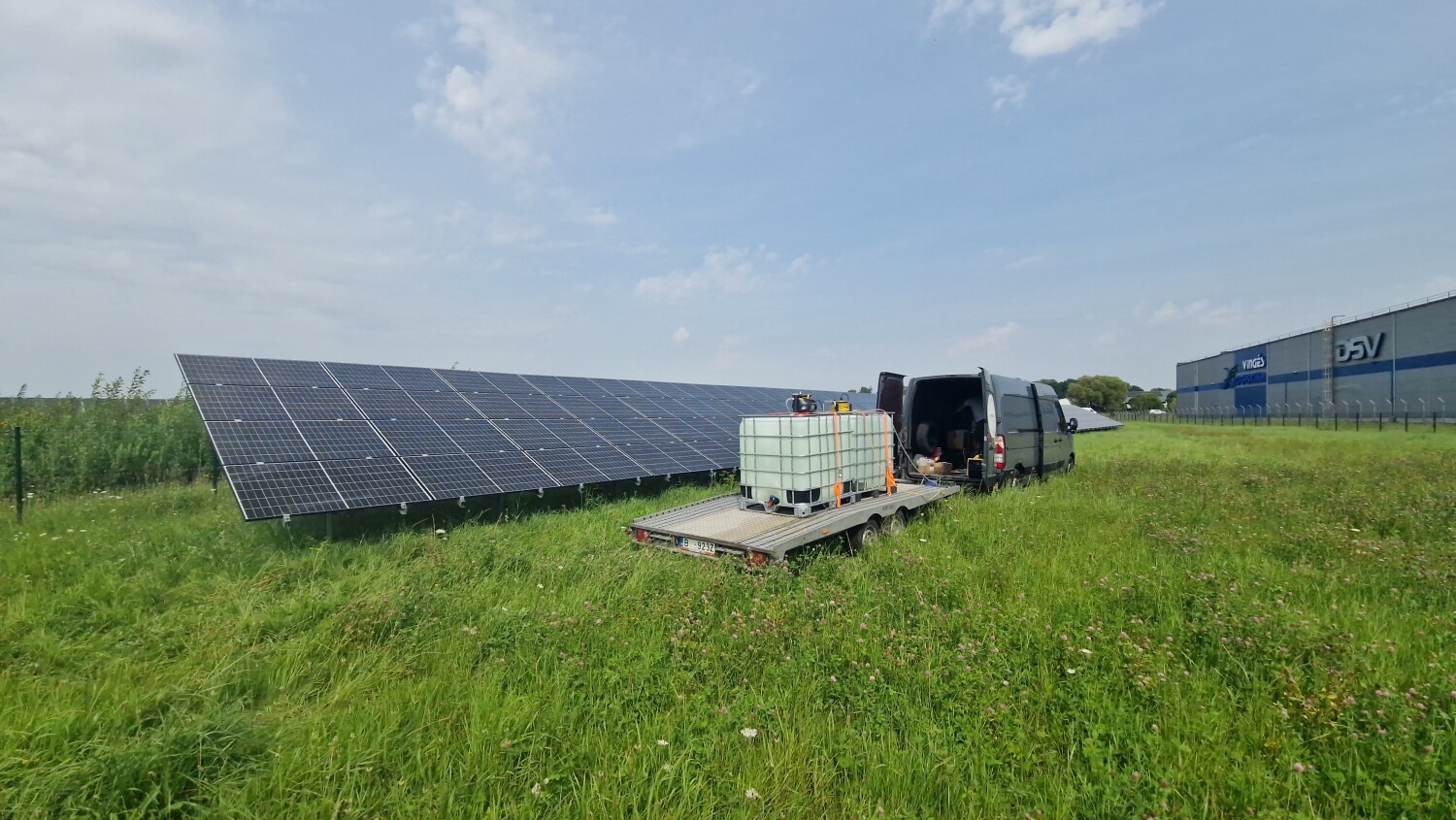
Solar Panel Efficiency: How Water Quality Affects Cleaning Results?
The quality of water used in solar panel cleaning is crucial for performance and longevity. Untreated water can leave mineral deposits, reducing energy generation and increasing maintenance costs.
Introduction: The Importance of Cleaning and its Influencing Factors
The efficient operation of solar panel systems depends on many factors, including regular and proper maintenance. Dust, pollen, bird droppings, and other dirt can significantly reduce the panels' ability to absorb sunlight, thereby decreasing the amount of energy generated. While regular cleaning is widely recognised as an essential maintenance element, the impact of water quality on this process and the final result is often overlooked.
It is important for solar farm owners and managers to realise that not all cleaning solutions are equally effective or safe in the long term. Improperly chosen cleaning methods or the use of low-quality materials can cause more harm than good, reducing return on investment and accelerating panel degradation.
Why is Water Quality Crucial?
Most cleaning processes involve water. However, tap water, well water, or even rainwater contain various minerals – calcium, magnesium, iron, as well as chlorine and other impurities. As water dries, these substances can leave hard deposits and stains on the panel surface. Over time, these mineral layers become thicker and more difficult to remove.
These deposits not only detract from the aesthetic appearance of the panels but, more importantly, reduce their transparency and, consequently, their efficiency. Even a thin layer of minerals can block a significant amount of sunlight from reaching the photovoltaic cells, leading to energy losses that can amount to several per cent of the total generation capacity. Studies show that even minor soiling can reduce panel yield by 5-10%, but mineral deposits can further increase this figure.
Deionised Water: An Optimal Cleaning Solution
To ensure maximum cleaning efficiency and prevent the formation of mineral deposits, it is recommended to use deionised or demineralised water. This water is purified of all ionised impurities, resulting in virtually pure H₂O. By using deionised water, panels are cleaned without stains and deposits, as there are no minerals that could dry on the surface and leave marks.
The use of deionised water reduces the need for chemical cleaning agents, which can be aggressive and damage the panel coating over time. Furthermore, it reduces cleaning frequency, as panels remain clean and efficient for longer, thereby lowering overall O&M costs.
Robotic Cleaning with Filtered Water: Precision and Efficiency
Robotic cleaning systems are increasingly being integrated into modern solar farm maintenance strategies. These systems, combined with high-quality water filtration, provide unparalleled precision and efficiency. Robotic cleaning with filtered water, offered by pvcare.eu, ensures that every panel surface is treated uniformly and without streaks, maximising its transparency.
The use of filtered water in robotic processes addresses the problem of mineral deposits at its root, providing long-term benefits through stable energy generation and reducing the need for more intensive and costly periodic cleaning. This approach aligns with best industry practices and ensures compliance with the highest quality standards.
Long-Term Benefits and Return on Investment
Investment in quality panel cleaning, using appropriately treated water, pays off with enhanced system performance and longevity. Solar farms that are regularly cleaned with deionised water consistently show higher energy generation rates compared to those where untreated water is used. This directly impacts financial indicators and reduces the payback period.
Moreover, by preventing the formation of mineral deposits, the likelihood of hotspots appearing on the panel surface is reduced. These can arise due to uneven dirt or stains and contribute to premature module degradation. This extends the service life of the panels and reduces potential warranty costs or repair expenses, ensuring long-term stability and returns for investors.