
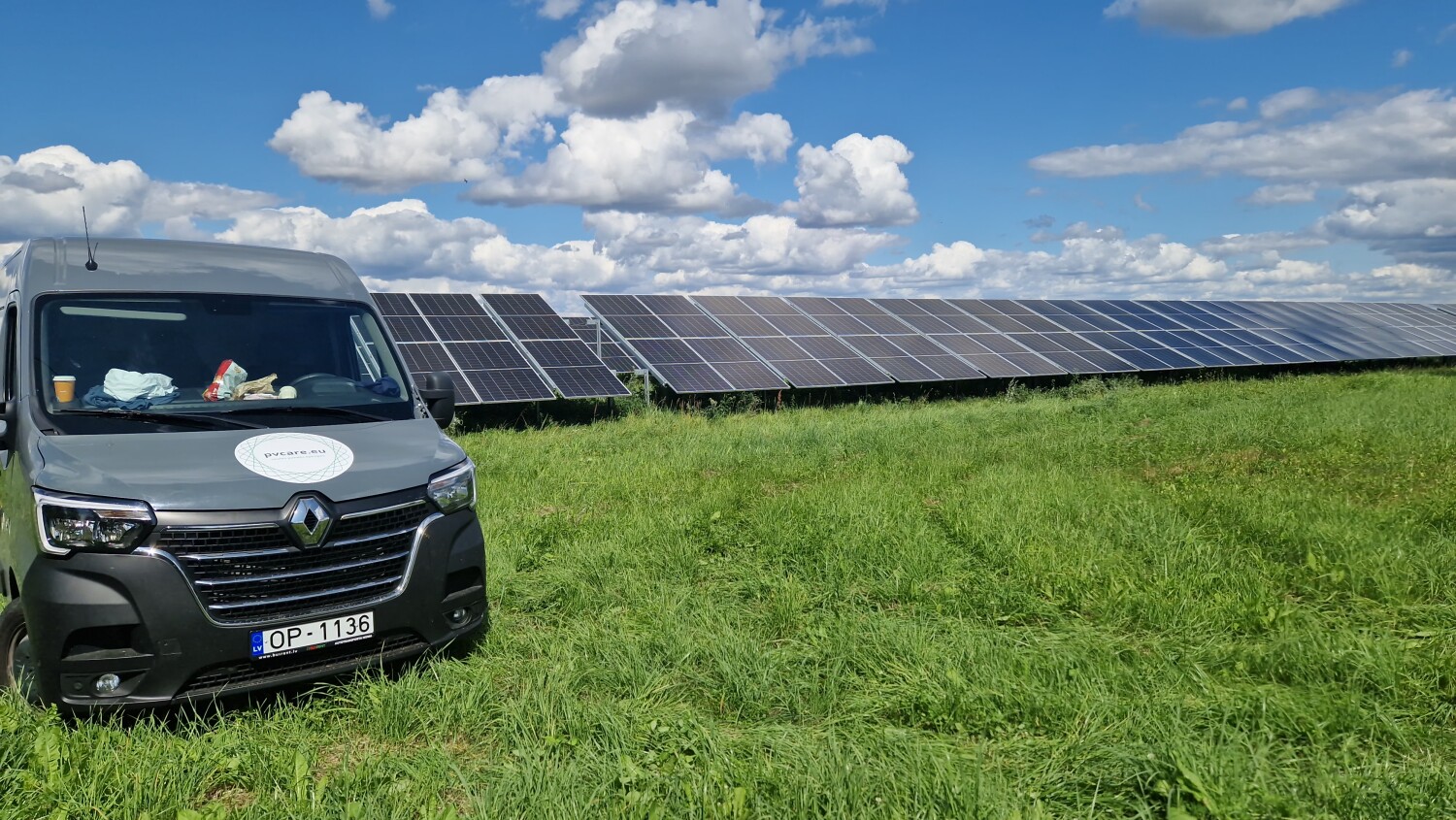
Solar Park Maintenance: An Investment in Long-Term Performance
We analyse two scenarios: the performance of an unmaintained versus a regularly maintained 400kW solar park over a 10-year period. Discover how maintenance costs, at 5% of revenue, can significantly improve your return on investment.
Introduction: The Importance of Maintenance for Solar Park Sustainability
The construction of solar parks represents a significant investment, promising a stable and long-term income stream. However, to fully realise this promise, a conscious approach to asset upkeep is required. The question often arises as to whether regular maintenance is necessary if the system appears to be operating without issues.
This article examines the performance differences over a ten-year period for two 400 kW solar parks located in similar climatic conditions. One park is left to its own devices, while the other receives regular, professional maintenance. Our goal is to demonstrate that maintenance is not merely an expense, but a strategic investment that significantly impacts project profitability and sustainability.
Scenario 1: Unmaintained Solar Park – Long-Term Losses
Let us consider a 400 kW solar park where no scheduled maintenance is carried out over a 10-year period. Initially, the system operates efficiently, but problems begin to emerge over time. Dust, bird droppings, pollen, and other dirt on the panels reduce solar light absorption, thereby decreasing energy production. Similarly, wild vegetation can shade the panels, creating hot spots and reducing efficiency.
Firstly, panel surface contamination can lead to a performance decrease of up to 15-20% per year. Over ten years, this translates into significant lost revenue. Secondly, hot spots caused by dirt and vegetation contribute to panel degradation, which shortens their lifespan and increases the risk of failure. Thirdly, without regular inspection, defects such as cable damage, inverter faults, or component wear cannot be identified and rectified in a timely manner, which can lead to unexpected downtime and expensive repairs. Overall, the revenue from an unmaintained park can decrease by 15-30% over ten years compared to an optimally maintained system, not including potential capital expenditure for premature equipment replacement.
Scenario 2: Regularly Maintained Solar Park – Maximum Return
In comparison, let us look at a 400 kW solar park that undergoes regular, professional maintenance, the cost of which averages 5% of the park's annual revenue. This maintenance includes panel cleaning with robotic equipment and filtered water, vegetation control (grass mowing), thermal drone inspections (with reports on dronepv.eu), as well as technical maintenance in accordance with LVS EN IEC 62446-2:2020 and continuous monitoring.
Thanks to these measures, the panels are kept optimally clean, ensuring maximum light absorption. Vegetation is regularly controlled, preventing shading. Thermal drone inspections enable early detection of potential issues, such as cell defects or connection anomalies, which are not visible to the naked eye. This allows for preventive repairs and averts larger damages or downtime. Adherence to standards guarantees system safety and longevity. Over a ten-year period, although there are fixed maintenance costs, the energy production of a regularly maintained park remains close to initial estimates, with minimal degradation. This ensures stable and predictable revenue, offsetting maintenance costs with significant benefits in production volume and system longevity.
Financial Analysis and Benefits
Assuming a 400 kW solar park in Latvia produces approximately 400 MWh per year on average, and energy revenue is an average of 100 EUR/MWh. Thus, annual revenue is 40,000 EUR. If maintenance costs are 5% of revenue, this amounts to 2,000 EUR per year or 20,000 EUR over a 10-year period. In the case of an unmaintained park, assuming performance decreases by an average of 15-20% over 10 years, lost revenue could reach 60,000 – 80,000 EUR (an average of 7,000 EUR/year in losses).
Comparing the two scenarios: an unmaintained park that has not invested 20,000 EUR in maintenance loses approximately 70,000 EUR in revenue. A regularly maintained park that has invested 20,000 EUR in maintenance retains its performance and revenue. This means the net benefit from regular maintenance is approximately 50,000 EUR over 10 years, in addition to extended system life and reduced risk of unexpected repairs. This comparison clearly shows that maintenance costs are less than the lost revenue and potential capital expenditure in the future.
Key Maintenance Components and Their Impact
1. **Robotic panel cleaning:** Prevents efficiency drops due to dirt, which can be as much as 15-20%. Regular cleaning with filtered water maximises light absorption and preserves the integrity of the panel surface. This also reduces the risk of hot spot formation, which can cause panel damage.
2. **Grounds maintenance (grass mowing):** Prevents panel shading, which is especially important in autumn and spring when the sun angle is lower. Shading reduces the efficiency not only of individual panels but also of the entire system and can create hot spots. A well-maintained area also facilitates access and reduces fire risk.
3. **Thermal drone inspections:** With reports from the dronepv.eu platform, defects such as cell damage and hot spots are identified, optimising production and preventing major failures. Early detection of defects allows for repairs before they become critical, thereby reducing downtime and repair costs. Such inspections are indispensable for large-scale parks.
4. **Maintenance according to LVS EN IEC 62446-2:2020 and monitoring:** Ensures system safety, compliance with standards, and longevity. Regular inspection and monitoring of electrical connections, inverters, and other components allow for timely detection of deviations from the norm and response before they escalate into serious damage.
Conclusions: Maintenance as the Key to Success
It is essential for solar park owners and investors to realise that a solar park is not a self-sufficient system that simply “lives its own life”. Without regular and professional maintenance, its performance and financial return will diminish over time, irreversibly losing potential revenue and risking significant capital expenditure. Our analysis clearly shows that maintenance costs, even at 5% of revenue, pay for themselves many times over, ensuring stable energy production, extending equipment life, and reducing risks.
Investing in a professional O&M partner is not only beneficial but also crucial to guarantee your solar park's maximum profitability and sustainability throughout its operational life. Pvcare.eu offers comprehensive maintenance solutions, ensuring that your investment operates at full capacity.