
Solar Plant Performance Analysis and Defect Identification
Effective solar plant performance analysis and timely defect identification are critical for maximising energy generation and long-term return on investment. Understanding data interpretation and applying modern diagnostic tools allows for the optimisation of O&M strategies.
Introduction: Why is Accurate Performance Analysis Important?
The profitability of solar plants directly depends on their ability to continuously generate energy at maximum capacity. Any deviation from the expected performance, even seemingly minor, can lead to significant financial losses in the long term. Therefore, regular and precise performance analysis is fundamental to effective solar plant management, ensuring that the system operates optimally and maximises the return on investment.
Modern solar plants are complex electrical systems consisting of thousands of components. Failures or efficiency losses can occur at the level of individual panels, inverters, cabling systems, or even ground preparation. Without a systematic approach to identifying and addressing these problems, there is a risk that plants will operate below their potential.
The Importance of Data: Monitoring and Key Performance Indicators (KPIs)
Continuous monitoring of solar plant data is a fundamental prerequisite for performance analysis. Information collected by the system regarding energy production, inverter operation, temperature, and other environmental parameters provides valuable insight into the plant's condition. This data is used to calculate key performance indicators (KPIs).
Key KPIs for solar plants include: Performance Ratio (PR), System Availability, Specific Yield (kWh/kWp), Losses, and Others. PR, for example, is a good indicator of the system's overall efficiency, comparing actual energy generated with theoretically possible output, taking into account irradiation and temperature. Deviations from historical or expected PR values can signal problems.
Common Causes of Performance Losses
Performance losses in solar plants can be caused by various factors. Poor panel cleanliness, due to dust, bird droppings, or pollen, is one of the most common. Partial shading from surrounding vegetation, buildings, or even other panels can significantly reduce the output of module strings. Other causes include panel degradation (PID, LID), inverter failures, cable damage, inadequate connections, grass shading, and even incorrect system design or installation.
Identifying systematic faults requires regular data analysis. For instance, a consistently lower PR value in one inverter string may indicate faulty panels, a short circuit, or an earth fault. Therefore, it is important not only to collect data but also to know how to interpret it correctly and link it to potential causes.
Modern Diagnostic Methods for Defect Identification
To accurately identify the causes of performance losses, advanced diagnostic methods are applied. Thermal drone inspections, which we offer via the dronepv.eu platform, are one of the most effective tools. They allow for rapid and precise mapping of temperature anomalies across the entire plant, revealing hot spots, damaged cells, output failures, or even hidden degradation. Thermal maps provide a visual representation of each panel's condition.
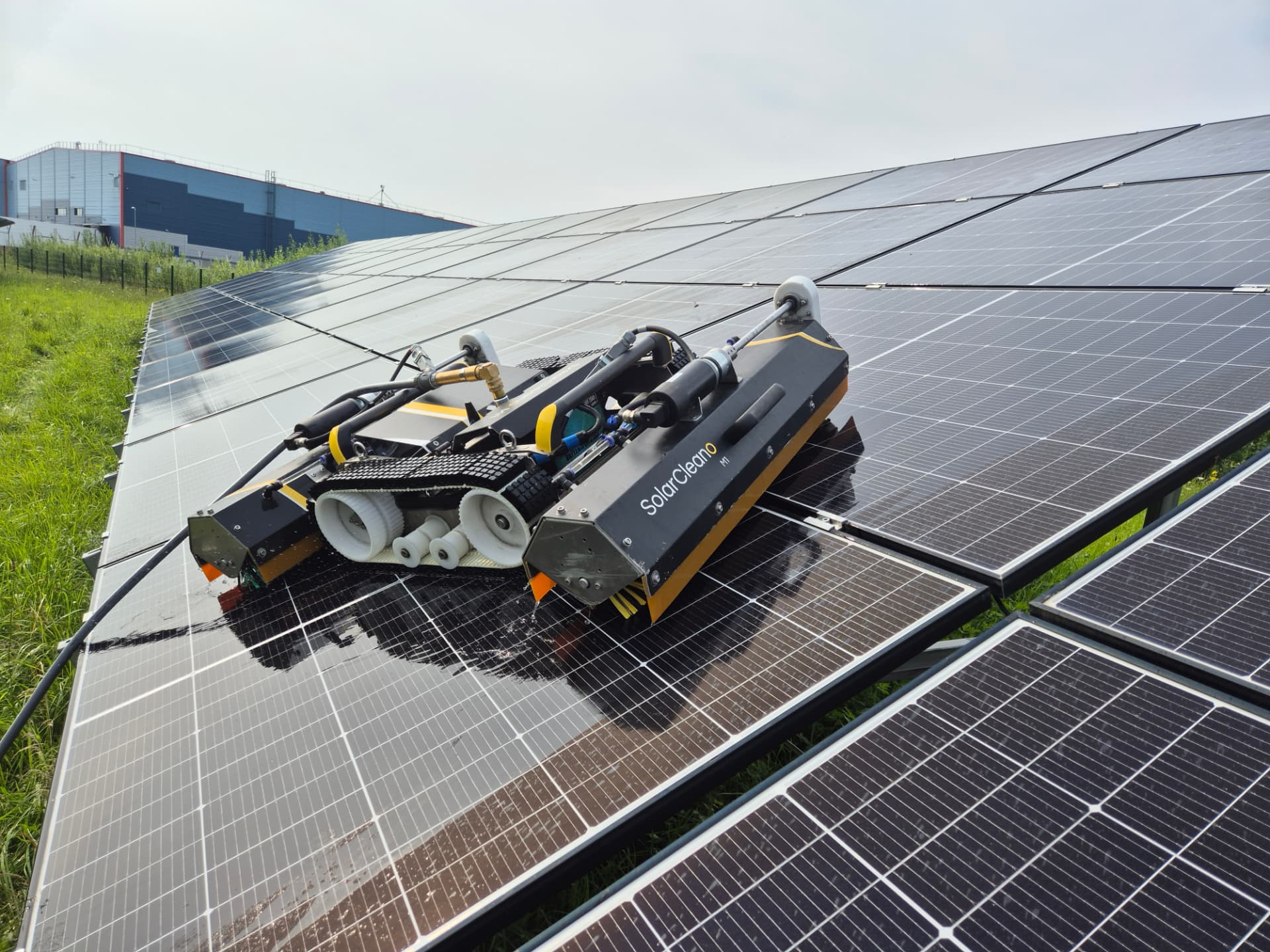
In addition to thermal diagnostics, it is important to conduct periodic photovoltaic system checks in accordance with the LVS EN IEC 62446-2:2020 standard. This includes insulation resistance measurements, open-circuit voltage and short-circuit current measurements, IV curve analysis, and visual inspections to detect mechanical damage or corrosion. Robotic panel cleaning with filtered water, offered by pvcare.eu, directly prevents efficiency losses associated with dirt and is part of a proactive O&M strategy.
Proactive Maintenance and Strategy Optimisation
Timely defect identification, using data analysis and modern diagnostic methods, allows for a shift from reactive to proactive maintenance. This means that potential problems are addressed before they can cause significant losses or system downtime. Regular and planned maintenance activities, such as vegetation control, cable checks, and cleaning, reduce risk and extend the plant's operational life.
The compiled information on defects and their causes enables the optimisation of O&M strategies. For example, if a high number of hot-spot defects is detected, it may indicate supplier issues or the need for more frequent thermographic inspections. Continuous data analysis and feedback to the maintenance team ensure that the plant operates at maximum efficiency throughout its lifecycle.