
Unforeseen Operational Disruptions: How to Reduce Risks in Solar Farms?
The continuous operation of solar farms is a crucial factor for investment returns. This article explores the most common causes of unforeseen disruptions and offers proactive strategies to mitigate them, ensuring system stability and maximising profitability.
Introduction: The Importance of Operational Continuity in Solar Farms
The solar energy industry is rapidly developing, and with it, the demand for stable and continuous operation of solar farms is growing. Every unexpected interruption in energy production results in financial losses and can affect long-term investment returns. Therefore, proactive risk management and prevention of operational disruptions have become a critically important aspect of any solar farm owner’s and operator’s strategy.
In this article, we will examine the most common causes of unforeseen operational disruptions in solar farms and propose effective solutions to minimise these risks, thereby ensuring the longevity and optimal performance of the solar system.
Common Causes of Unforeseen Disruptions
Unforeseen operational disruptions in solar farms can arise due to various factors. One of the main causes is environmental impact – dust, bird droppings, pollen, sandstorms, or even leaves can significantly reduce panel efficiency if regular cleaning is not performed. Extreme weather conditions, such as severe hail, lightning strikes, or prolonged snow cover, can cause both temporary and irreversible damage.
Technical failures are another significant risk factor. Inverter failures, cable damage, connection corrosion, or an inadequate earthing system can lead to system outages. Defective panels or their degradation over time can also reduce energy production, which is not always easy to identify without specialised inspections.
Regular Maintenance as a Cornerstone
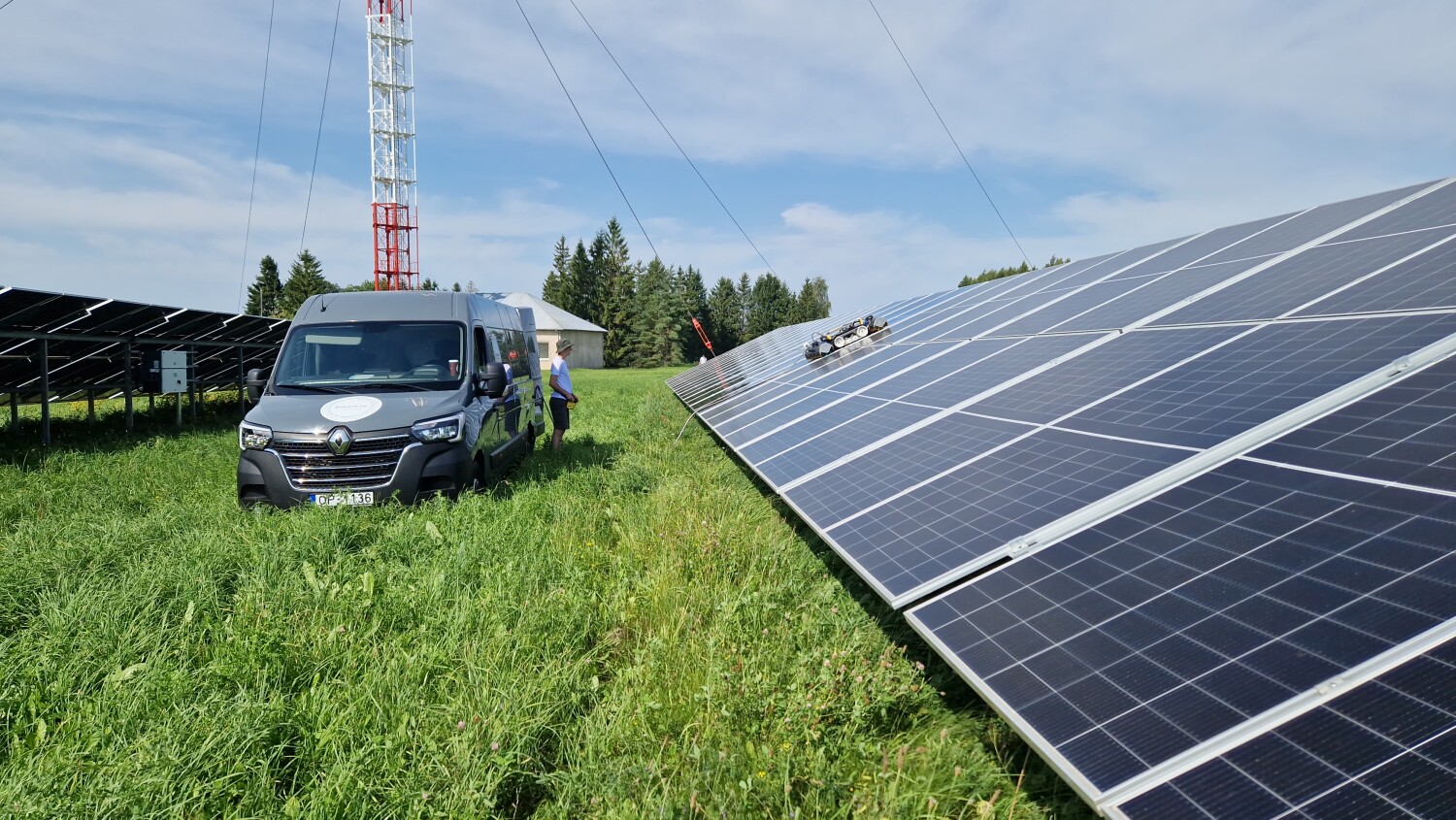
Comprehensive and regular maintenance is an invaluable tool for preventing unforeseen disruptions. Adherence to the requirements of the LVS EN IEC 62446-2:2020 standard ensures system safety and performance. Robotic panel cleaning with filtered water effectively prevents “hot spots” and performance losses caused by dirt.
In addition to panel cleaning, it is also important to carry out maintenance work related to vegetation control – regular grass mowing prevents shading and fire hazards, ensuring optimal conditions for energy production. Regular visual inspections help to detect visible damage in a timely manner, such as cracked panels or damaged cables.
Applying Technology to Reduce Risks
Modern technologies offer new opportunities for preventing and quickly identifying unforeseen disruptions. Thermal drone inspections with specialised cameras allow for fast and precise identification of panel defects, such as micro-cracks, shunt diodes, or disconnected cells, which are not visible to the naked eye. Such inspections, complemented by detailed reports (for example, on the dronepv.eu platform), enable timely planning of repairs before a minor defect escalates into a major problem.
The use of a continuous monitoring system provides real-time data on system performance, inverter operation, and energy production anomalies. This allows for quick reactions to any deviations, reducing downtime and potential losses. Data analysis helps predict potential failures and optimise maintenance schedules.
Proactive Approach and O&M Partner Selection
Effective risk management requires a proactive approach that includes regular technical audits, risk assessment, and the development of incident management plans. It is crucial for solar farm owners and investors to choose an experienced O&M (Operation & Maintenance) partner who offers comprehensive services, covering the entire lifecycle of the solar farm.
An O&M partner with specialised knowledge and equipment can not only perform regular inspections and maintenance but also provide advice on system optimisation, performance improvement, and potential risk mitigation. Choosing the right partner is an investment in the long-term stability and profitability of the solar farm.
Conclusion
The continuous operation and longevity of solar farms depend directly on effective risk management and a proactive maintenance strategy. By investing in regular panel cleaning, vegetation control, thermal drone inspections, and modern monitoring, solar farm owners can significantly reduce the risk of unforeseen operational disruptions.
Collaboration with an experienced O&M service provider who understands the specifics of the industry and applies the latest technologies is key to optimal performance, safety, and maximum return on investment for solar farms in the long term.